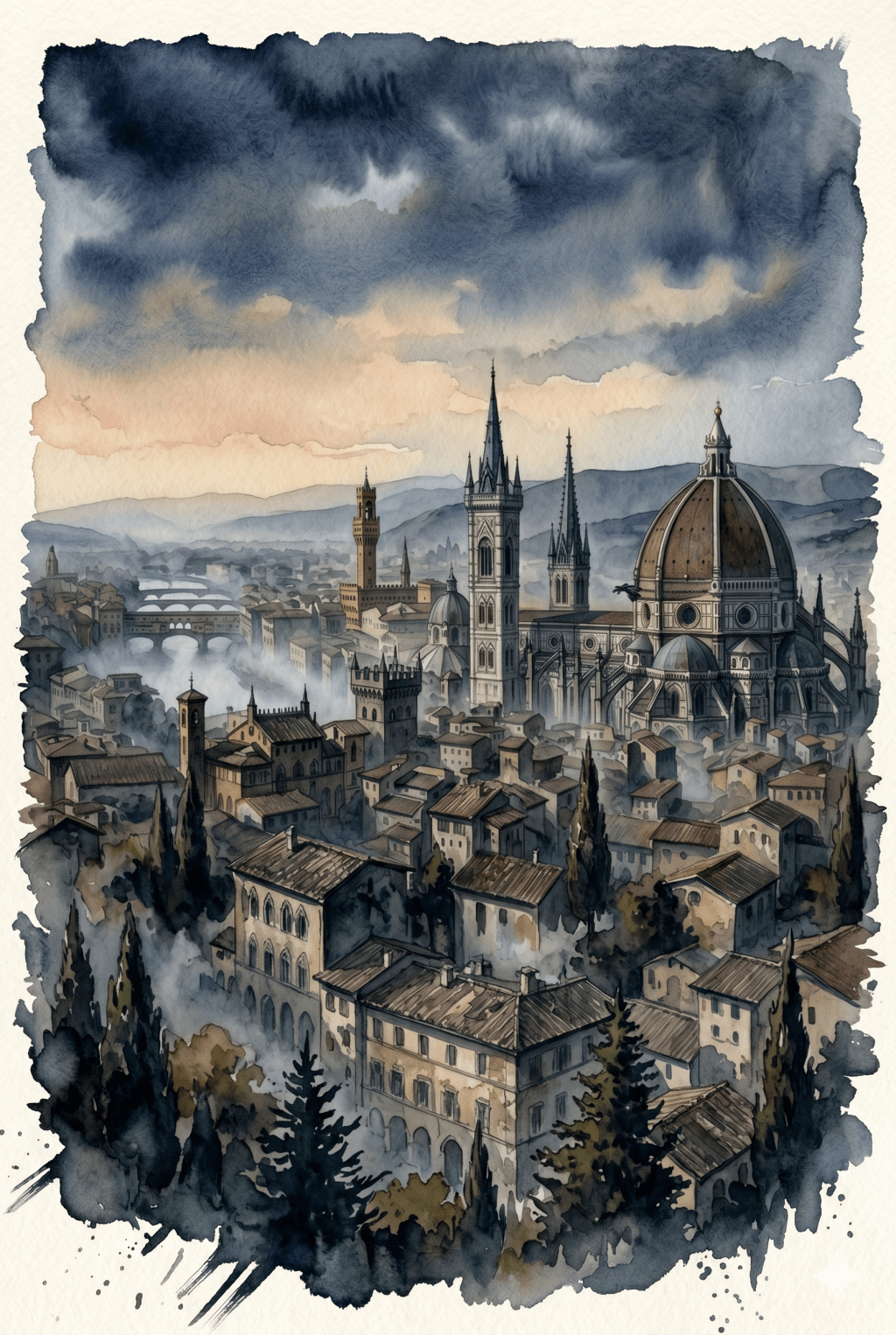
There is a specific kind of magic that happens when an author you adore tackles a period of history that lives permanently in your heart. For me, that intersection is Renaissance Italy and the incomparable Maggie O’Farrell.
If you’ve followed my bookish adventures, you know I’ve long harbored a deep obsession with the Medici family. My love for Florence and the intricate, often treacherous landscape of 16th-century Italy isn’t just a passing interest; it’s a full-blown historical romance.
I read this book during a particularly intense and busy time at work. It served as a “healing and rejuvenating” escape when I needed it most. There is something about the “mellow sunlight” and the “crisp freshness” of the Italian landscape that feels like soul food.
The O’Farrell Effect: From Hamnet to Lucrezia
I have long maintained a deep respect for O’Farrell’s writing. I fell head-over-heels for Hamnet—her prose is so evocative and fragile that it lingers long after the final page. Interestingly, I still haven’t seen the movie adaptation of Hamnet, and I’m honestly not sure if I ever will. When a book creates such a “parallel universe” in your mind, sometimes you want to protect that vision from the screen.
In The Marriage Portrait, O’Farrell brings that same lyrical, sensitive touch to the story of Lucrezia de’ Medici.
The Plot (Spoiler-Free!)
The story follows young Lucrezia as she is thrust from the relative seclusion of her father’s palace into a high-stakes marriage with Alfonso, the Duke of Ferrara.
- The Atmosphere: Much like the “desolate beauty” found in my favorite atmospheric reads, O’Farrell paints a world that is simultaneously opulent and suffocating.
- The Seasonal Fit: Reading this at the height of Autumn—my favorite season—added a layer of “magic and nostalgia” to the experience. The “low slanting sunlight” of the season perfectly matched the book’s overall aura.
- The Tension: The narrative masterfully flips between the past and a chilling “present day” where Lucrezia realizes her husband may be plotting her demise.
Why You Should Read It
This isn’t just a historical retelling; it is a “love affair with words”. O’Farrell captures the sensory details of the era—the smell of oil paints, the weight of velvet gowns, and the sharp chill of a stone corridor. It reminds me of the “enduring power of books” to transport us away from our daily grind.
If you are looking for “captivating prose and a hint of escapism,” this is your next five-star read. It’s a beautiful, haunting tribute delivered with “compassion and sensitivity”.
Verdict: A must-read for history buffs and anyone looking to “escape this planet for a little bit” through a brilliant story.
Are you a fan of historical fiction, or do you prefer your “escapades” to be more modern?


